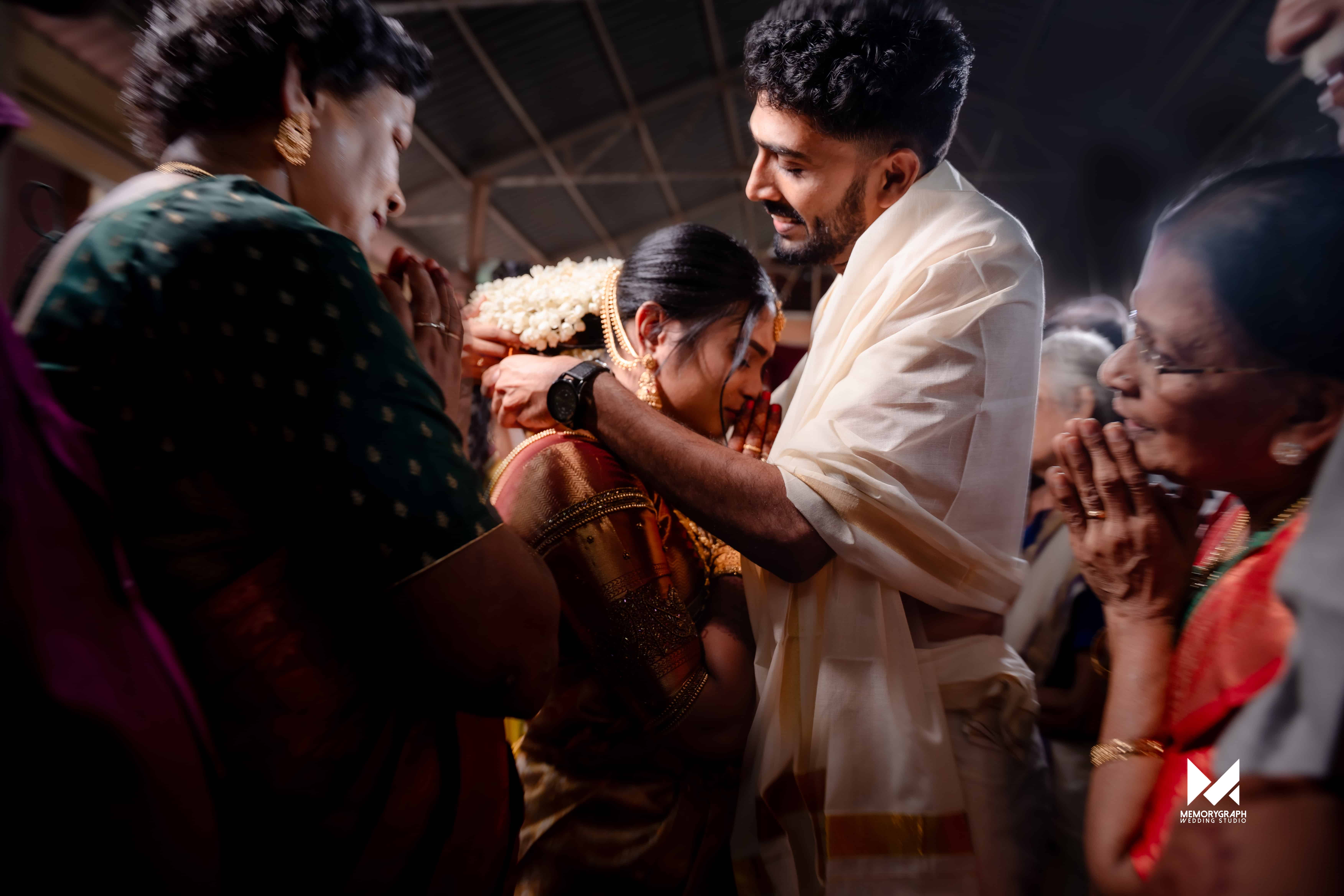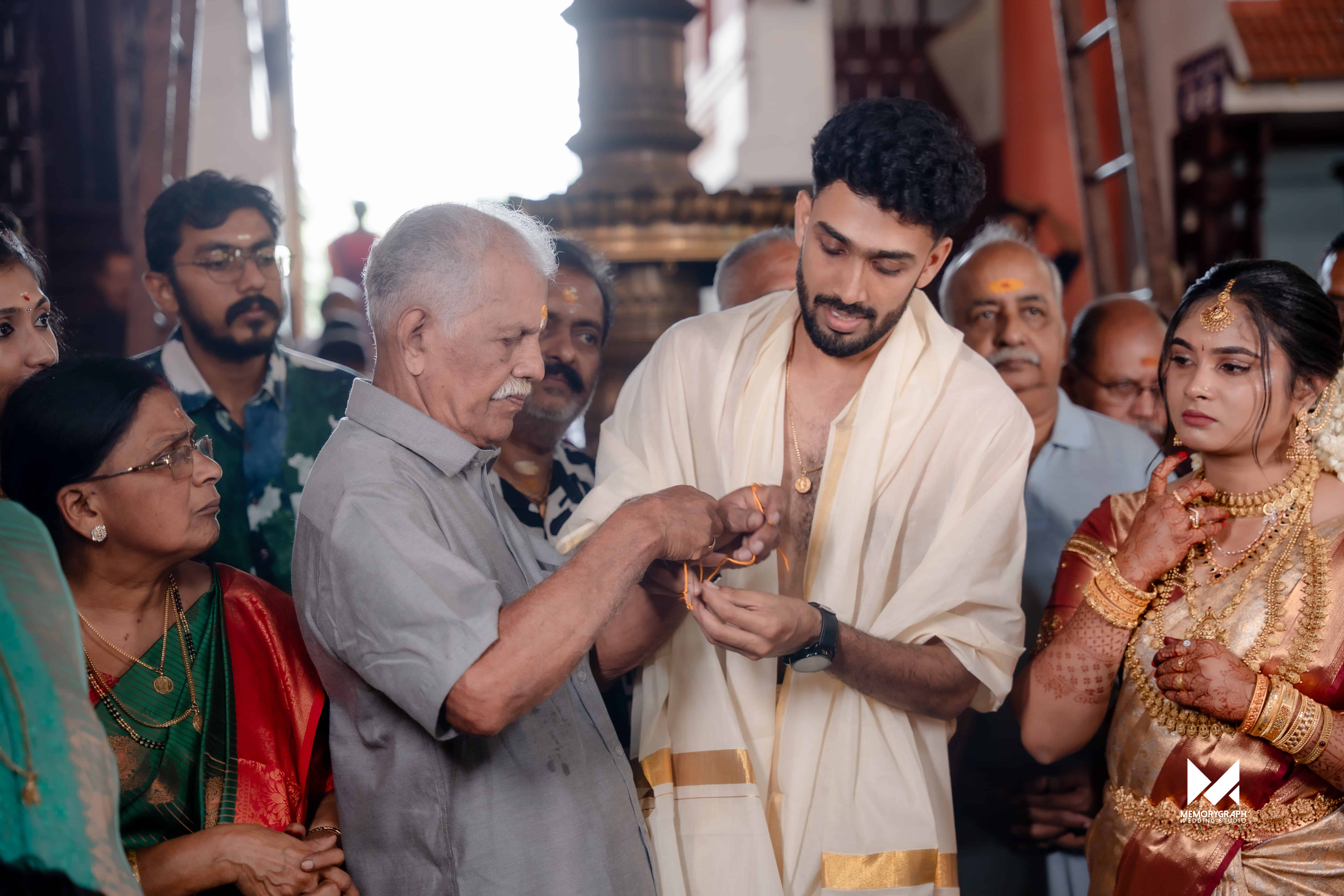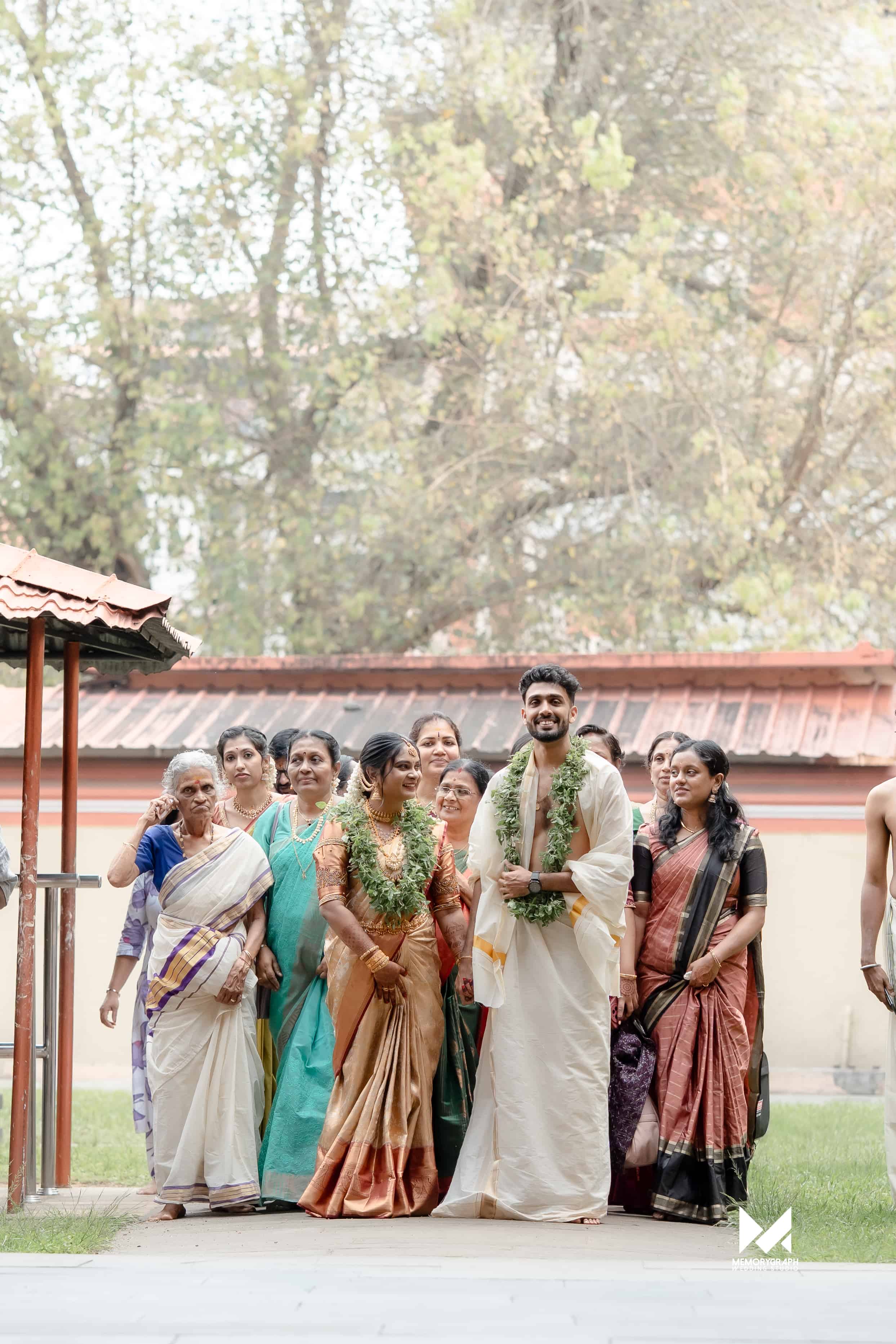
Most couples plan wedding photography around the event schedule. We usually work the other way around: we plan key photographs around the light first, then fit them sensibly into the day.
Midday light is harder than it looks
Kerala weddings often begin early, but portrait sessions and family groups frequently drift toward noon. That is when the sun becomes harsh, skin tones flatten, and shadows under the eyes become harder to control.
This does not mean midday photographs are impossible. It means they need either shade, good indoor light, or a team that knows how to simplify the frame instead of fighting the sun.
Golden hour is not a myth, but it is short
The soft light couples love usually lasts for a narrow window close to sunset. Depending on the season and weather, that window can be much shorter than expected.
For that reason, we usually recommend:
- keeping the couple session ready to begin before the light peaks
- finishing family groupings earlier
- identifying the exact portrait location in advance
The best golden-hour photographs rarely happen because we are lucky. They happen because we are ready five or ten minutes before the light becomes perfect.
Indoor weddings need a different plan
Temple halls, churches, auditoriums, and homes each handle light differently. A bright courtyard can save the day. So can an open verandah, a doorway, or even a single clean wall facing the right direction.
When couples allow time for a short location scout, we can usually find a calm spot that produces far better portraits than forcing everything onto the main stage.
Family portraits need clean timing
Family photographs are often the first place the schedule slips. People disappear, ceremonies overrun, and the light drops while nobody notices.
The simplest fix is to assign a family coordinator and keep a short written list ready. Good timing is not only about beauty. It is about preserving everyone's patience.
Build a timeline that protects the best light
If portraits matter to you, treat light like a real part of planning, not an afterthought. That might mean shifting makeup timing, shortening a break, or reserving fifteen quiet minutes before reception activity begins.
Those small choices make a visible difference in the final gallery.